The Wagyu Standard
The Word and the Breed
Wagyu (和牛) means Japanese cattle. Wa: Japan. Gyū: cattle. Wagyu refers to four closed breeds, raised in Japan, registered to a national herd book. An animal is Wagyu by pedigree or it is not Wagyu at all.
What sets these breeds apart is a genetic capacity no other cattle possess to the same degree: the ability to deposit fat within the muscle rather than around it. The Japanese call the result shimofuri (霜降り). Falling frost. Fine white marbling laced through deep red meat. This fat is chemically distinct: high in monounsaturated fats. It begins to melt below body temperature.
Kiwami lists only JMGA-certified Wagyu. Every cut is traceable to an individual animal from a named partner farm in Japan.
Our standardHistory and Cultural Significance
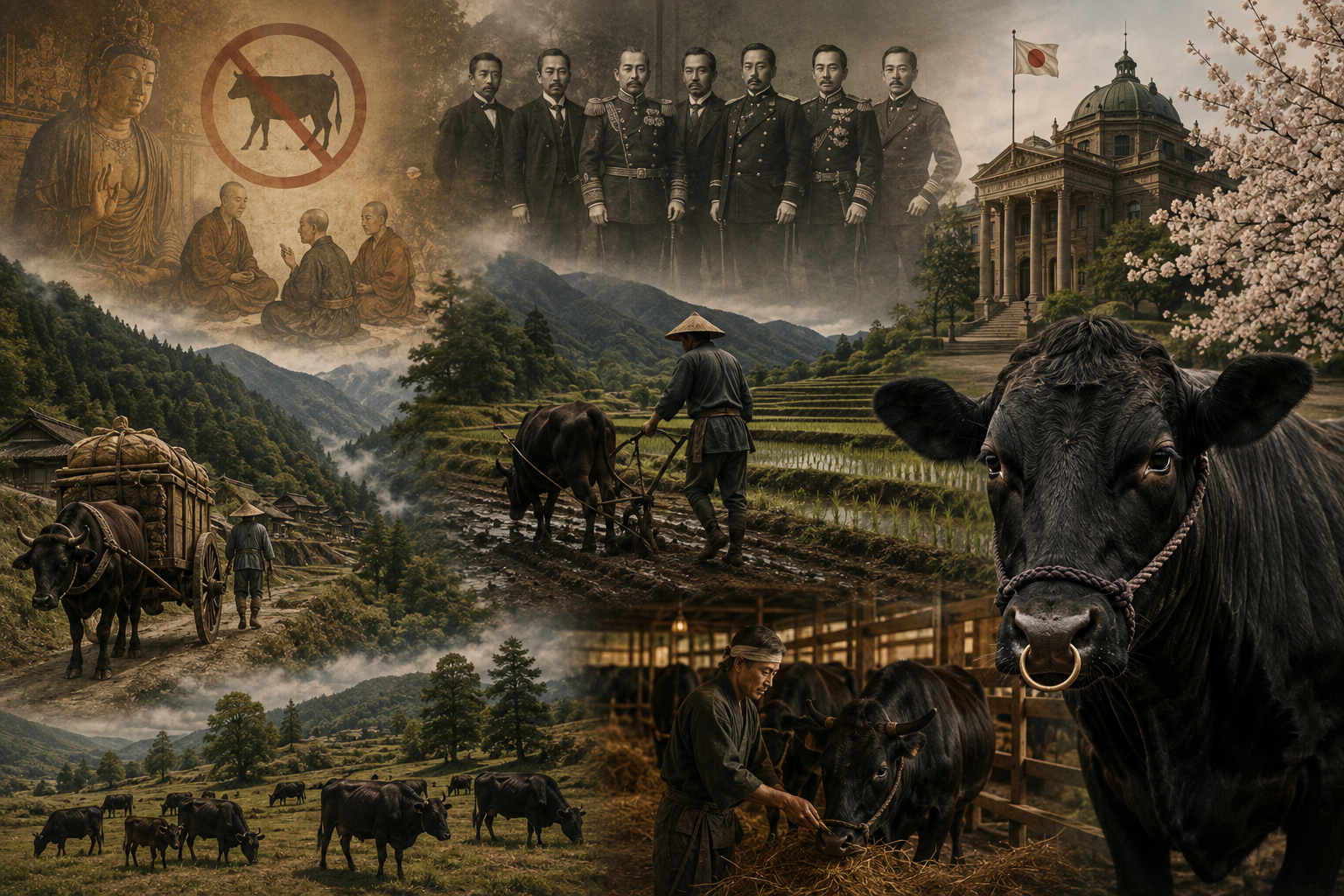
Cattle reached Japan around the second century. For most of the seventeen centuries that followed, beef all but vanished from the table: Buddhist edicts prohibited the consumption of meat from 675 AD.
Cattle were draft animals. They ploughed rice paddies and hauled loads through mountain valleys. Herds stayed small, isolated by terrain. They bred for strength and endurance. That isolation, sustained for over a thousand years, is the foundation of the breed.
The prohibition lifted in 1872. The Emperor and the Meiji government publicly embraced beef as part of Japan's modernisation. A brief period of crossbreeding with imported European stock followed. Then, in 1910, it stopped. The herd was closed. Every Wagyu animal alive today descends from the lines fixed in that era.
What followed was a century of disciplined refinement. Regional strains honed over generations. Bloodlines recorded with the rigour of a family registry. Individual animals raised in small herds, often a few dozen head, by farmers who know each one.
The Four Breeds
All Wagyu belongs to one of four breeds. One dominates.
Japanese Black
黒毛和種 · Kuroge Washu
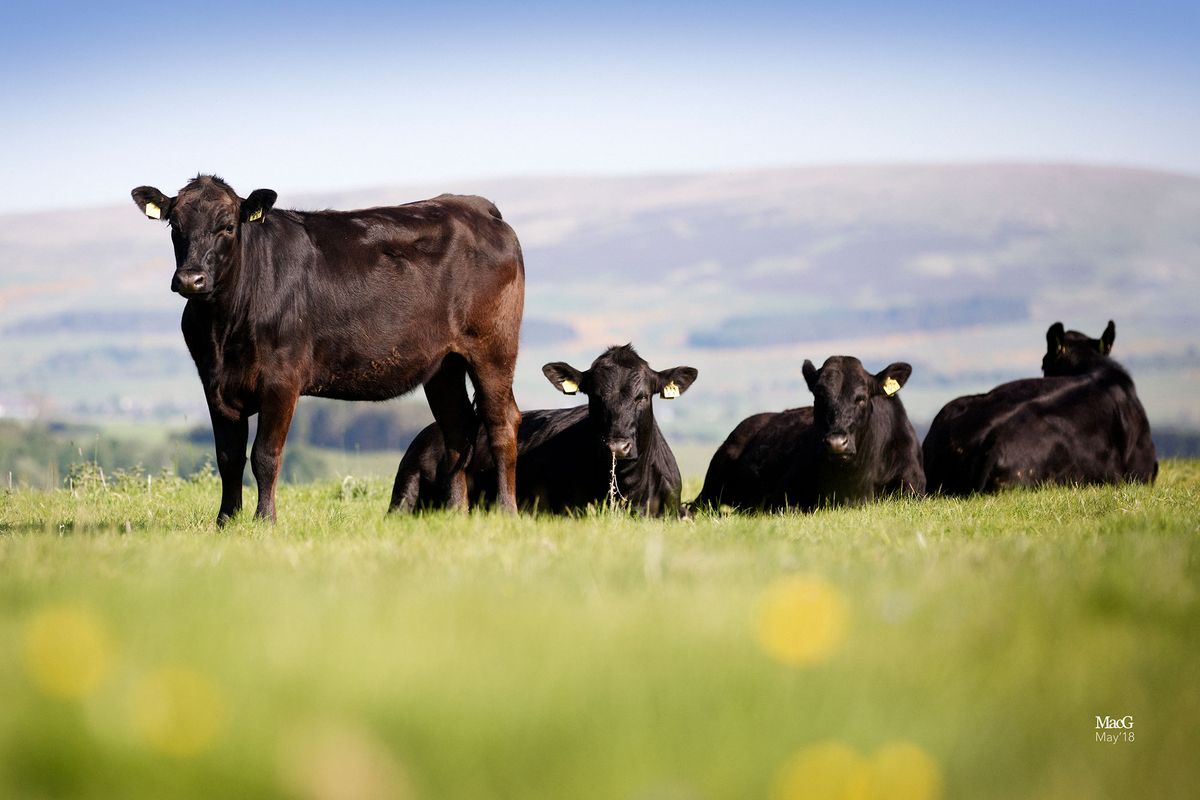
ShareOver 97%The marbling breed. Every major beef brand (Kobe, Matsusaka, Ōmi) is Japanese Black. When the grade reads A5, this is the animal behind it.
Japanese Brown
褐毛和種 · Akage Washu
Share~4%Raised mainly in Kumamoto and Kōchi. Leaner, with a cleaner red-meat character and less marbling than Japanese Black.
Japanese Shorthorn
日本短角種 · Nihon Tankaku
Share<1%A northern breed from Iwate, Aomori, and Akita. Pasture-raised, lean, high in inosinic and glutamic acid, the compounds behind umami.
Japanese Polled
無角和種 · Mukaku Washu
Share<1%The rarest. Around 200 head, raised exclusively in Yamaguchi Prefecture. Firm texture, pronounced flavour. Seldom seen outside Japan.
| Breed | Share | Notes |
|---|---|---|
| Japanese Black黒毛和種 · Kuroge Washu | Over 97% | The marbling breed. Every major beef brand (Kobe, Matsusaka, Ōmi) is Japanese Black. When the grade reads A5, this is the animal behind it. |
| Japanese Brown褐毛和種 · Akage Washu | ~4% | Raised mainly in Kumamoto and Kōchi. Leaner, with a cleaner red-meat character and less marbling than Japanese Black. |
| Japanese Shorthorn日本短角種 · Nihon Tankaku | <1% | A northern breed from Iwate, Aomori, and Akita. Pasture-raised, lean, high in inosinic and glutamic acid, the compounds behind umami. |
| Japanese Polled無角和種 · Mukaku Washu | <1% | The rarest. Around 200 head, raised exclusively in Yamaguchi Prefecture. Firm texture, pronounced flavour. Seldom seen outside Japan. |
One distinction matters here. "Wagyu" raised in America or Australia is almost always crossbred with Angus and graded under different systems. It is not held to the standard described on this page. We do not list it.
The Regional Brands
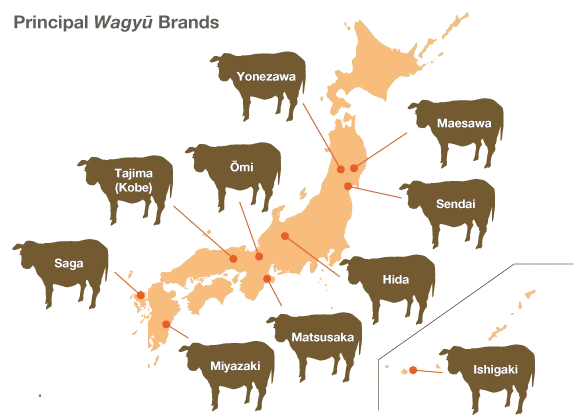
Breed is the foundation. Brand is the discipline built on top of it. Japan recognises over 300 regional beef brands, meigara-gyu. Each is a certification system, with its own criteria for bloodline, birthplace, feed, and grade. Each famous name is a standard. An individual animal meets it or it does not.
Kobe
神戸牛
PrefectureHyōgoTajima-strain Japanese Black. The full life cycle, birth to processing, stays within Hyōgo Prefecture. BMS 6 or above. Only a few thousand head qualify each year.
Matsusaka
松阪牛
PrefectureMieVirgin female cattle only. The most extended fattening regime in Japan. Special-grade animals are raised for roughly 900 days.
Ōmi
近江牛
PrefectureShigaJapan's oldest beef brand, with some 400 years of history. Presented to the shogunate as miso-cured "medicine" during the prohibition era.
Miyazaki
宮崎牛
PrefectureMiyazakiA4 or above, by definition. Took the top prize at three consecutive national Wagyu competitions, the so-called Wagyu Olympics.
Hida
飛騨牛
PrefectureGifuJapanese Black raised in Gifu's mountain terrain for a minimum of 14 months. Yield and quality thresholds set by the region's certification council.
| Brand | Prefecture | Notes |
|---|---|---|
| Kobe神戸牛 | Hyōgo | Tajima-strain Japanese Black. The full life cycle, birth to processing, stays within Hyōgo Prefecture. BMS 6 or above. Only a few thousand head qualify each year. |
| Matsusaka松阪牛 | Mie | Virgin female cattle only. The most extended fattening regime in Japan. Special-grade animals are raised for roughly 900 days. |
| Ōmi近江牛 | Shiga | Japan's oldest beef brand, with some 400 years of history. Presented to the shogunate as miso-cured "medicine" during the prohibition era. |
| Miyazaki宮崎牛 | Miyazaki | A4 or above, by definition. Took the top prize at three consecutive national Wagyu competitions, the so-called Wagyu Olympics. |
| Hida飛騨牛 | Gifu | Japanese Black raised in Gifu's mountain terrain for a minimum of 14 months. Yield and quality thresholds set by the region's certification council. |
A regional brand certifies the animal's life. The grade certifies the carcass. The two together are the full picture.
How Wagyu is Graded
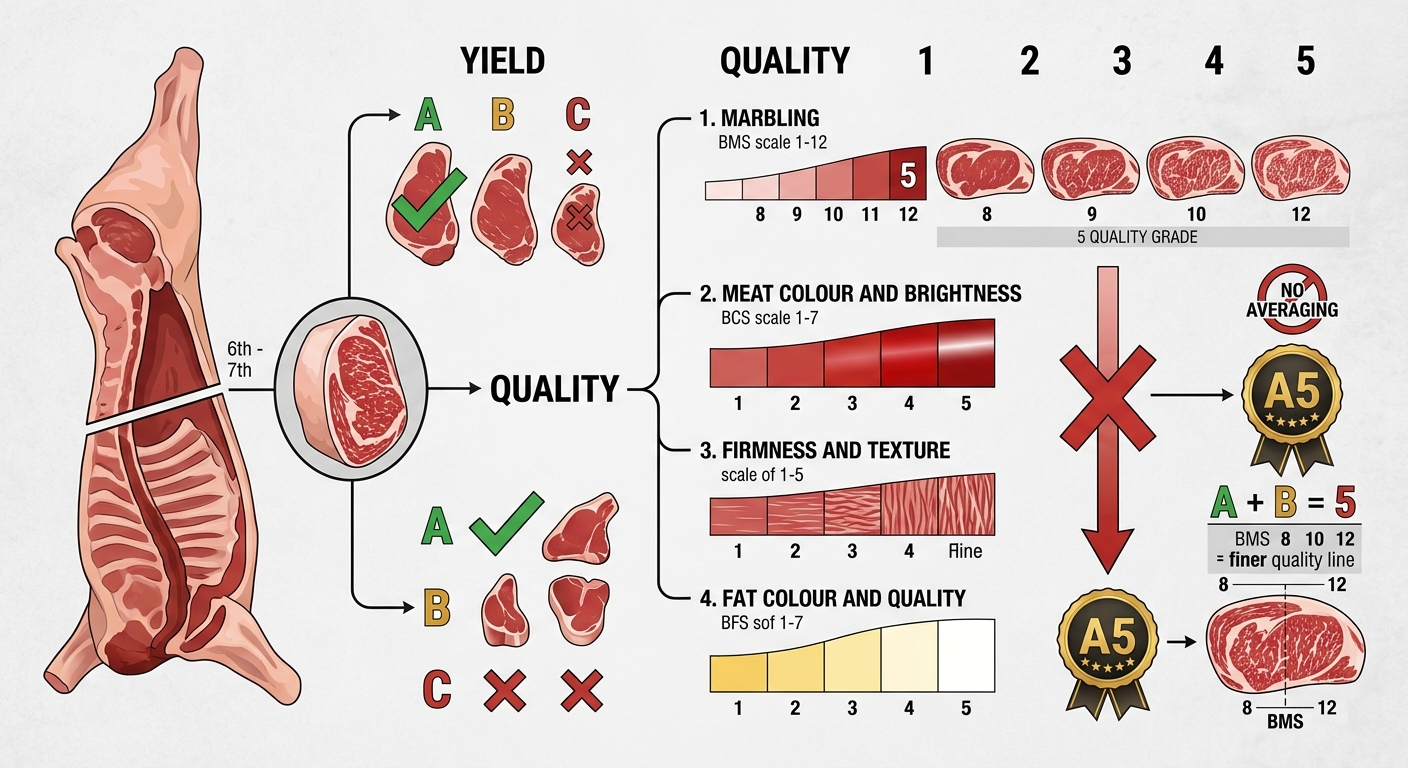
Every carcass sold at auction in Japan is graded by a licensed assessor of the JMGA, the Japan Meat Grading Association. The grade has two parts, and both are read at a single cut surface between the sixth and seventh rib.
The letter is yield. A, B, or C. The proportion of usable meat on the carcass. A is the highest.
The number is quality. 1 to 5, assessed across four criteria:
Marbling
ScaleBMS 1–12Density and distribution of intramuscular fat, scored against the Beef Marbling Standard
Meat colour and brightness
ScaleBCS 1–7Depth and lustre of the red
Firmness and texture
Scale1–5Fineness of the grain
Fat colour and quality
ScaleBFS 1–7Whiteness and sheen of the fat
| Criterion | Scale | What it measures |
|---|---|---|
| Marbling | BMS 1–12 | Density and distribution of intramuscular fat, scored against the Beef Marbling Standard |
| Meat colour and brightness | BCS 1–7 | Depth and lustre of the red |
| Firmness and texture | 1–5 | Fineness of the grain |
| Fat colour and quality | BFS 1–7 | Whiteness and sheen of the fat |
The rule that gives the system its teeth: the final quality score is the lowest of the four. A carcass with perfect marbling and a single weak criterion does not receive a 5. There is no averaging. No compensation.
A5 is therefore a compound claim: the highest yield and a flawless sweep of all four quality criteria. Within it, BMS draws the finer line: every score from 8 to 12 earns the 5. The difference between an 8 and a 12 is visible on the cut surface. A5 sets the floor. The BMS states where the cut sits above it.
The Cuts
Marbling is not uniform across the animal. Each cut carries a different ratio of fat to muscle, and each has its own preparation.
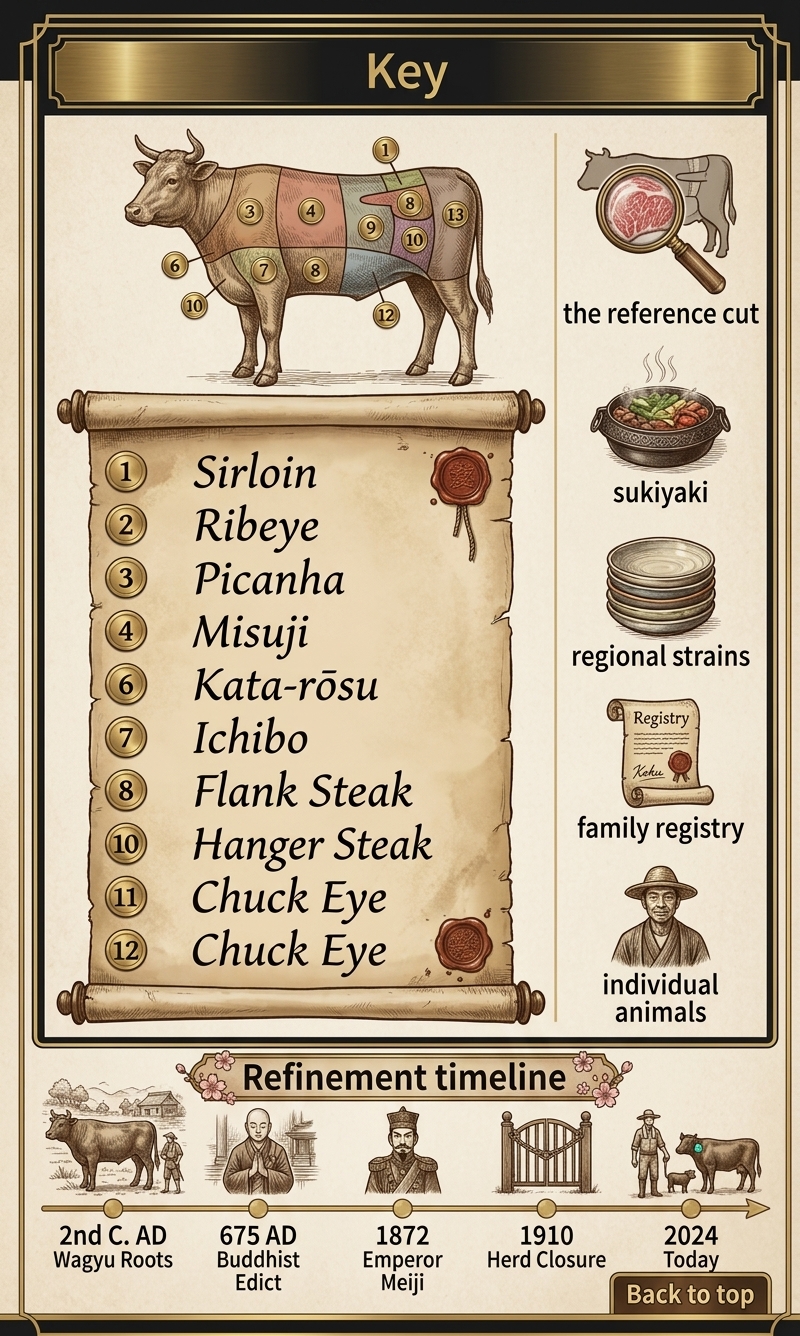
Sirloin
サーロイン
The reference cut. Full marbling, balanced against a firm strip of meat.
PreparationSteak, sukiyakiRibeye
リブロース · Ribu-rōsu
The most generously marbled of the primal cuts. Rich, unapologetic.
PreparationSteak, sukiyaki, shabu-shabuTenderloin
ヒレ · Hire
Scarce, some 3% of the carcass. Fine-grained, lower in fat, exceptionally tender.
PreparationThick-cut steakZabuton
ざぶとん
"The cushion." A small chuck-flap cut. Prized by yakiniku specialists: often BMS 10 to 12, on par with the ribeye.
PreparationYakiniku, thin-cut searingMisuji
みすじ
Top blade. Dense feather-pattern marbling around a fine central seam. Limited yield per animal.
PreparationYakiniku, tatakiKata-rōsu
肩ロース
Chuck roll. Deep flavour with robust marbling. The traditional sukiyaki cut.
PreparationSukiyaki, shabu-shabuIchibo
イチボ
Rump cap. Where lean meets marbled, pronounced beef flavour with a softer finish.
PreparationYakiniku, steak
| Cut | Notes | Preparation |
|---|---|---|
| Sirloinサーロイン | The reference cut. Full marbling, balanced against a firm strip of meat. | Steak, sukiyaki |
| Ribeyeリブロース · Ribu-rōsu | The most generously marbled of the primal cuts. Rich, unapologetic. | Steak, sukiyaki, shabu-shabu |
| Tenderloinヒレ · Hire | Scarce, some 3% of the carcass. Fine-grained, lower in fat, exceptionally tender. | Thick-cut steak |
| Zabutonざぶとん | "The cushion." A small chuck-flap cut. Prized by yakiniku specialists: often BMS 10 to 12, on par with the ribeye. | Yakiniku, thin-cut searing |
| Misujiみすじ | Top blade. Dense feather-pattern marbling around a fine central seam. Limited yield per animal. | Yakiniku, tataki |
| Kata-rōsu肩ロース | Chuck roll. Deep flavour with robust marbling. The traditional sukiyaki cut. | Sukiyaki, shabu-shabu |
| Ichiboイチボ | Rump cap. Where lean meets marbled, pronounced beef flavour with a softer finish. | Yakiniku, steak |
The secondary cuts hold to the same standard. A BMS 10 zabuton is a different experience to a BMS 10 sirloin. Each earns its grade the same way.
Handling and Preparation
Wagyu arrives blast-frozen and vacuum-sealed, shipped at −18°C or below until it reaches your door. Frozen only, by design. What happens next is in your hands. The rules are few, and they matter.
Thawing
- Thaw slowly, in the refrigerator, in the sealed pack: 24 to 48 hours depending on thickness.
- Never thaw at room temperature or in a microwave. Rapid thawing draws out moisture and dulls the fat's texture.
- Rest the meat at room temperature for 30 to 60 minutes before cooking. Cold muscle seizes against heat.
Portioning
- Wagyu is rich. 100 to 150 grams per person is a serious portion.
- Thick cuts can be portioned before cooking. A sharp knife, single strokes, no sawing.
Storage
- Keep frozen at −18°C or below until the day of thawing. Once thawed, cook within 2 days: a quality standard, not just a safety minimum. Do not refreeze.
Cooking
- Trim a piece of the fat and render it in the pan. Wagyu is cooked in itself. No other oil is needed.
- High heat, short time. Sear to a crust, then rest. The intramuscular fat does the basting from within.
- Season with salt alone, just before the pan. The marbling is the sauce.
- Stop at rare to medium. Beyond that, the fat you paid for renders out into the pan.
- Rest for half the cooking time before cutting.
The herdsman spent up to 900 days on this animal. The grader scored it at a single cut surface. The last ten minutes belong to you.